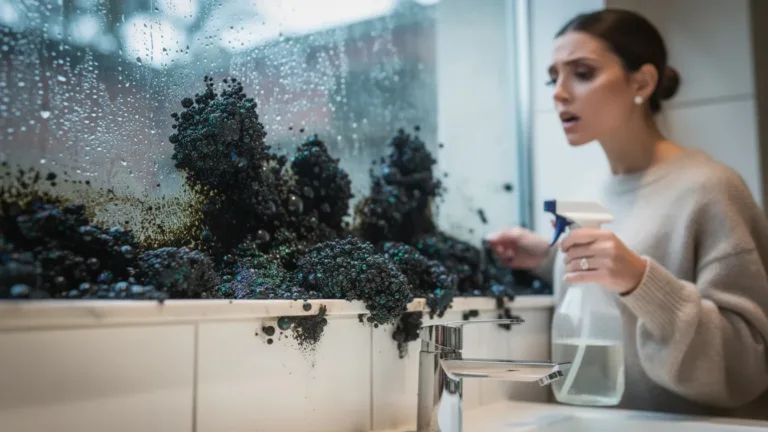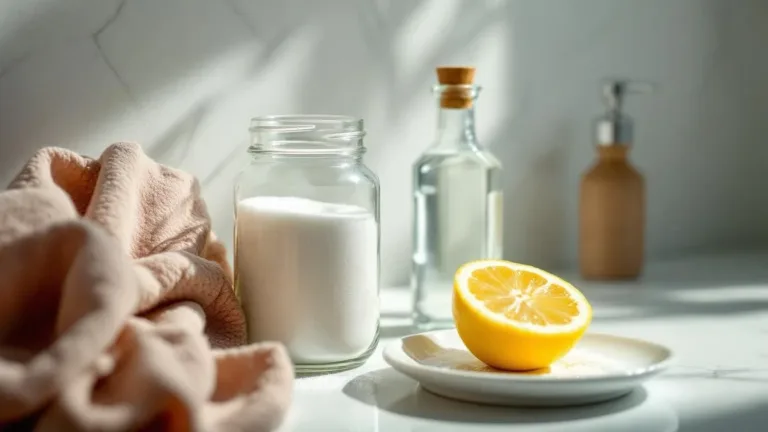
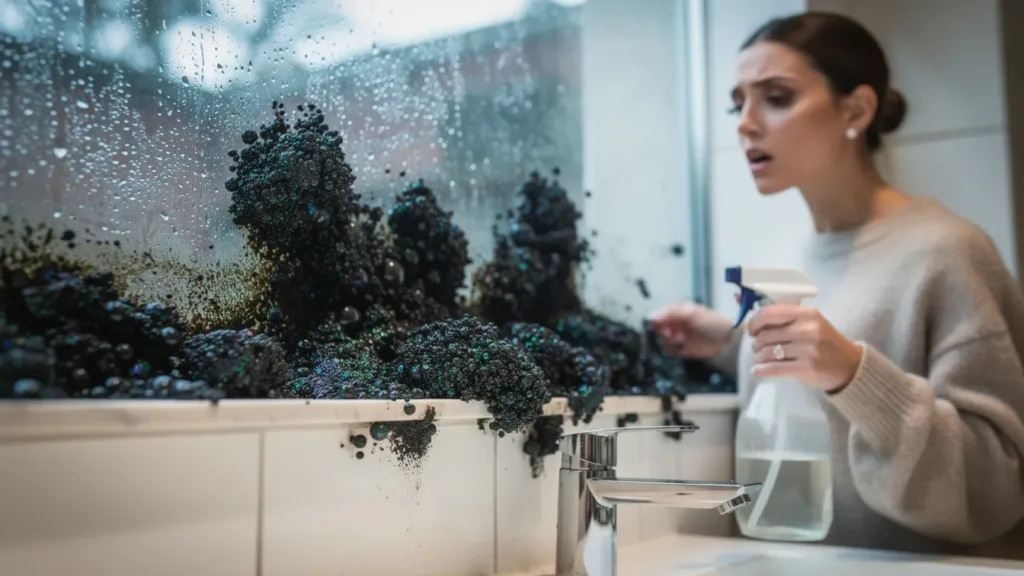

You open the laundry room door and are greeted by an unsettling sight: dark spots creeping up along the caulk, or a musty aroma wafting from the bathroom sink. You might think to reach for your trusty bottle of white vinegar, armed with countless internet tips claiming it’s your go-to for mold removal. But hold on—before you get your spray bottle out and start dousing those pesky black mold spores, let’s unpack the real story behind this popular cleaning hack. What if I told you that your vinegar solution might be doing more harm than good?
Highlights
- Vinegar can kill about 82% of mold species but is not a catch-all solution. 🦠
- It has limitations in penetrating deep fungal growth, leading to potential mold spread. 🏠
- The proper technique is essential for vinegar to be effective—and it takes time. ⏰
- If the mold keeps returning, it’s time to call in the professionals. 🔍
The Science Behind Vinegar’s Mold-Fighting Claims
Let’s get to the nitty-gritty: vinegar, especially the white distilled variety, has an acetic acid concentration of about 5%. This acidic environment creates a pH that can break down mold spores. Research indicates that it kills around 82% of common mold types, which sounds impressive until you realize that it leaves a significant portion intact. When I first discovered this while tackling a mold issue in my own home, I felt like I was accidentally feeding the problem instead of alleviating it!
Here’s where things get tricky: while vinegar is good for surface cleaning, it struggles with deeper fungal growth found in porous materials like drywall or carpets. I remember my initial attempts at cleaning the mold behind my washing machine—only to find that it kept coming back, and I wasn’t alone. Over time, I learned that relying solely on vinegar led to more frustration than relief.
When Vinegar Works (And When It Doesn’t)
So, when should you grab that bottle of vinegar? It works best on non-porous surfaces. I’ve had great success cleansing bathroom tiles, shower walls, and the interiors of kitchen appliances. Imagine that satisfying feeling of scrubbing your shower and watching mold disappear! But wait—check this out.
- Best for: Non-porous surfaces like tiles and metal fixtures. 🚿
- Not suitable for: Porous materials like wood or drywall that can trap spores deep within. ⚠️
Vinegar thrives in small, enclosed areas, so if you notice a minor stain measuring less than 10 square feet, it might be time for a vinegar clean-up. But invest in a reliable spray bottle, as dilution simply dilutes effectiveness; a common pitfall I learned the hard way!
Mastering the Vinegar Technique
Here’s how to put that vinegar to best use: Safety should always be your first priority. don the gloves, goggles, and possibly an N95 mask. Even harmless-looking mold can trigger allergies. Next, ventilation is crucial; open up those windows to keep air flowing. Now, grab the undiluted vinegar and generously soak the affected area—allow it to work its magic for at least an hour. I know, patience isn’t always easy. But taking time here pays off!
After waiting, mix a baking soda solution to remove remaining stains. The combination of vinegar and baking soda is surprisingly powerful; they complement each other well, unlike that one friend who always disagrees with you! Finally, give another light spray of vinegar after scrubbing and let it air dry. This step isn’t just for show—it’s a protective measure against instant regrowth.
When to Put Down the Vinegar and Call for Help
If you find that mold keeps bouncing back after your efforts, it might be time to consider professional assistance. If your mold problem spreads beyond that small area or appears to be lurking in hidden spots like your HVAC system, don’t hesitate to call in experts. I’ve been in situations where mold mysteriously proliferates, and when I finally sought professional help, they used tools like infrared cameras to identify the moisture sources I couldn’t see.
This isn’t just about cleaning; it’s about disinfection and ensuring health safety in your home. Mold can pose serious health risks if left untreated. Remember, prevention starts with awareness. Pay attention to drainage, humidity levels, and any signs of water leaks. It makes all the difference!
Protect Your Space—Avoid Mold Spread
Before you rush to grab that vinegar, think twice. While it can be a valuable tool in your home cleaning arsenal, it’s not a panacea for every mold issue. Staying informed and adopting smarter cleaning habits can protect your space from becoming a breeding ground for mold.
Take action now! Think critically about how you manage your space. Welcome to the new year—let’s make it a mold-free zone! And if you’re eager to learn more about home care and cleaning hacks, stick around. There’s always something new to discover.
In this journey of home management, you’re not alone. Many of us have faced the mold dilemma at some point. It’s about growth, learning, and perhaps a little trial and error. Embrace it and take control of your environment! Stay safe out there!