
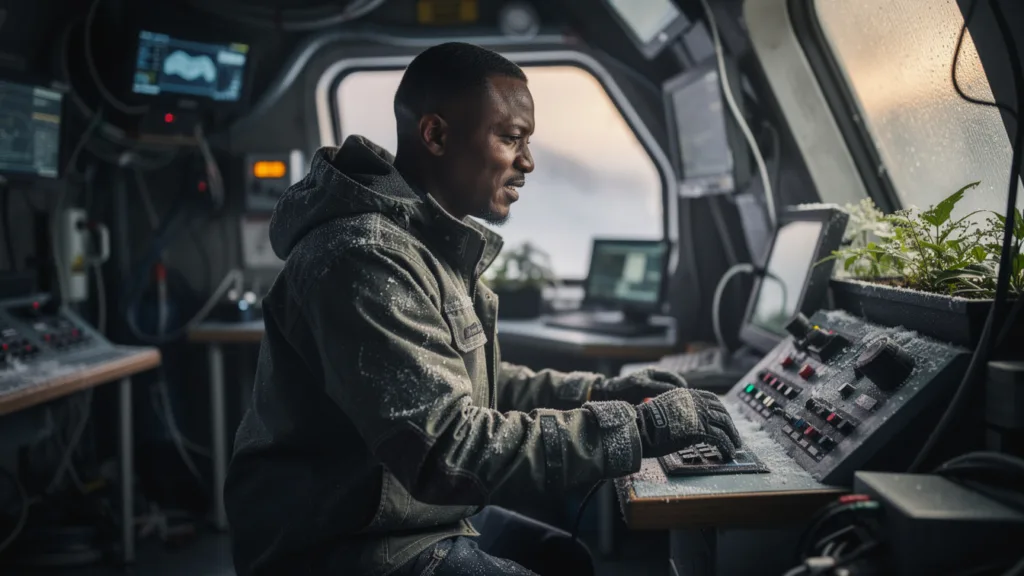

The icy expanse of Antarctica has long captivated scientists and adventurers alike, hiding layers of potential discoveries that could reshape our understanding of climate, life, and the very geology of our planet. Recently, an astounding journey beneath 2 kilometers of Antarctic ice revealed an intricate hidden world similar to opening a time capsule, back to an era over 30 million years ago.
Highlights
- 🌍 Discoveries beneath Antarctic ice may reshape our understanding of Earth’s history.
- 💧 Ancient ecosystems and subglacial lakes offer insights into life’s resilience.
- 🏞️ The region once featured rivers and forests, challenging traditional views of Antarctica.
- 🔬 Advanced technology like ice-penetrating radar has opened up new frontiers in polar research.
After years of limited exploration, breakthroughs in technology have allowed scientists not only to penetrate the thick ice but also to explore the ecosystem dormant beneath it. From glacial features to ancient microorganisms, Antarctica’s hidden gems paint a comprehensive picture of how life once thrived in this now frigid wilderness. What’s staggering is the realization that beneath this thick veneer of ice, a unique ecology awaits like a gift from the past.
The Subglacial Discovery That Changes Everything
The team of researchers recently uncovered a landscape more sizable than Maryland, specifically in Wilkesland, East Antarctica. This area, insulated for millions of years, showcases what life could have looked like when the region was warmer, dotted with lush forests and flowing rivers. Prof. Stewart Jamieson of Durham University summarized it succinctly: “The land underneath the East Antarctic ice sheet is less well-known than the surface of Mars.” Such statements illustrate the depths of our ignorance about this captivating world.
As they analyzed core samples and sediment from this long-isolated area, traces of ancient palm pollen emerged, a striking indicator of the tropical environment that once existed. The implication? Antarctica was not always an inhospitable place, devoid of life but rather a thriving ecosystem. Imagine a world where dinosaur-like trees towered over modern palm trees, all resting beneath our current understanding of a frozen desert.
Microorganisms Preserved in Time
The discovery of ancient microorganisms comes as another striking component of this exploration. These microorganisms have been tucked away for millennia, virtually “frozen in time,” waiting patiently to be studied. They hold invaluable information about past climates, acting like tiny ambassadors of Earth’s breezy past. This resilience naturally begs the question: What can these remnants tell us about surviving similar conditions on other planets, such as the icy moons of Jupiter?
- 🔬 They could provide insights into how ecosystems adapt to extreme environmental changes.
- 🌌 This also raises intriguing possibilities about the existence of life in similar extraterrestrial conditions.
In many ways, these microorganisms are like characters in an ongoing narrative, revealing to us the highs and lows of Earth’s climatic story, reinforcing the notion that life finds a way in the most unforgiving of environments.
The Role of Advanced Technology
This exploration wouldn’t be possible without cutting-edge technology like ground-penetrating radar, a vital tool in accessing these hidden worlds without disturbing their fragile ecosystems. The methods utilized represent a quantum shift in how researchers approach glaciology. They can now visualize anomalies beneath the ice, identifying river channels and geological structures that were previously concealed.
The systematic use of ice core analysis has also been instrumental in piecing together the vast puzzle that is Antarctica’s geological history. By understanding the layers of sediment, we can estimate climate conditions that prevailed millions of years ago, providing a clearer prediction of future shifts connected to global warming.
Environmental Implications and Future Research
The revelations from these subglacial explorations are of paramount importance concerning climate models. With rising temperatures, understanding how glaciation behaves is crucial for predicting sea level rise, potentially impacting coastal cities globally. Forecasting changes in the Antarctic ice sheet could provide an early warning system for ecological shifts that affect everyone.
Moreover, as we venture deeper, we must also consider the ecological implications of our actions in this pristine environment. The international research community emphasizes sustainable practices to ensure that exploration does not compromise Antarctic integrity.
How to Engage in Antarctic Research
As fresh discoveries unfold, it’s essential that we remain engaged, understanding not just the scientific significance but also the ethical responsibilities that accompany these knowledge-gathering endeavors. Who knows what else lies beneath the surface, waiting patiently to share its secrets with us? Antarctica is a living testament to the resilience of our planet. The discoveries made beneath its ice are not just breakthroughs in the realm of science; they are catalysts for discussions about our future, climate, and the delicate balance of life on Earth.